
Enhancing Knowledge Through Online Learning
Bimonthly online discussions are continuing education opportunities for mental health interpreters and clinicians who work with deaf consumers. QMHI's are required to have 40 contact hours of continuing education per year.
You can go to this URL https://support.zoom.us/hc/en-us/articles/201362193-How-Do-I-Join-A-Meeting- for more information on how to join the webinar. More tips for using Zoom can be found HERE
All presentations are in the form of a webinar. Links to the webinar will be sent out the same day as the event. This year our webinars will be hosted on Zoom. To use this platform, please read documents on the Zoom Website.
Important: In order to ensure time to process your registration, the completed form and payment must be received 7 days prior to the event you wish to join.
The registration fee for all online discussions in the calendar year 2025 is just $35.*
How to Register:
- Download and fill out the 'Permission to File CEUs" form. This will serve as your registration form for all online discussions within that calendar year.
- Send a check for $35.00 made out to ADARA- MHIT Fund along with the completed form to:
Shannon Reese, Services Coordinator
Alabama Department of Mental Health
Office of Deaf Services
P.O. Box 301410
Montgomery, AL 36130
Upcoming Events
All Events run 6:00 - 8:00 PM Central Time
2026 Online Discussion Events
November 10 Deaf Hispanic Identity and Community: Challenges and Opportunities.
Presenter: Jesus Barreto Abrams
Aileen Aldalur, Ph.D., is an Assistant Professor of Psychiatry at the University of
Rochester Medical Center. A licensed psychologist and Director of Research at the Deaf Wellness Center, her work focuses on adapting and developing evidence-based mental health interventions for Deaf individuals, with particular emphasis on suicide
prevention and treatment engagement. She currently leads a National Institute of
Presented by:
Aileen Aldalur, Ph.D.
September 8, 2026
All discussions are conducted from
6:00 - 8:00 Central Standard Time (CST)
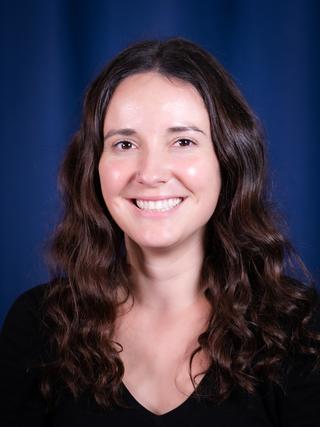
This Mental Health K23 award titled, Cognitive Behavioral Therapy for Treatment-Seeking to Improve Treatment Engagement and Reduce Suicide Risk Among Deaf Individuals. A former KL2 Career Development Scholar, Dr. Aldalur has earned recognition for her community-engaged research, including the 2025 Best Community Engagement Project
Award at URMC. Her work bridges clinical psychology, Deaf studies, and health equity to expand access to appropriate mental health care for Deaf communities.
"Now Showing"
"Exploring Ketamine Assisted Psychotherapy
With Deaf Individuals"
"
The Purpose of the Training
This workshop shares early findings on using Ketamine‑Assisted Psychotherapy (KAP) with Deaf adults, including feasibility, preferred adaptations, and changes in mental health symptoms. Participants will learn how to tailor KAP tools and communication methods for Deaf clients. Insights from a professional training retreat will highlight practical considerations and emerging best practices.
The Objectives of the Training:
-
Describe the development of Ketamine‑Assisted Psychotherapy (KAP) and explain its role within psychotherapeutic settings.
-
Explain how Ketamine‑Assisted Psychotherapy may help reduce mental health disparities experienced by Deaf adults.
-
Discuss how Ketamine‑Assisted Psychotherapy can be implemented with Deaf clients, including potential modifications and strategies to improve effectiveness.
After the Training, participants will
-
Summarize key concepts of Ketamine‑Assisted Psychotherapy (KAP).
-
Identify mental health disparities affecting Deaf adults and how KAP may help.
-
Describe basic adaptations for using KAP effectively with Deaf clients.
Target Audience:
Interpreters in Mental Health, Community Interpreters, Mental Health Professionals, School Counselors


